Langhui E8 Multi-Mode Sensory Data Acquisition Device: Provision of all-sensor training data for precision operating scenarios
LanghuiE8It's a specialized multi-modular sensor data acquisition facility launched by Changsalang Information Technology.RGB-D deep camera, double-eye RGB camera, 6-axis IMU, power sensor, microphone arrayFive sensors, complete.Hardware-level time synchronization <0.5ms, spatial trackingATE Accuracy4mm, and built-inNPU edge computing module. It is primarily aimed atprecision manufacturing enterprises(electronic/car/aerospace assembly),agricultural robotics companies(extraction control and fruit identification) andSmart team.(need touch + visual integration data training VLA model)。E8 is an integrated, open-and-in-box device that is currently rare on the market, a combination that replaces at least five independent collection units in traditional programmes.。
E8 Product Overview
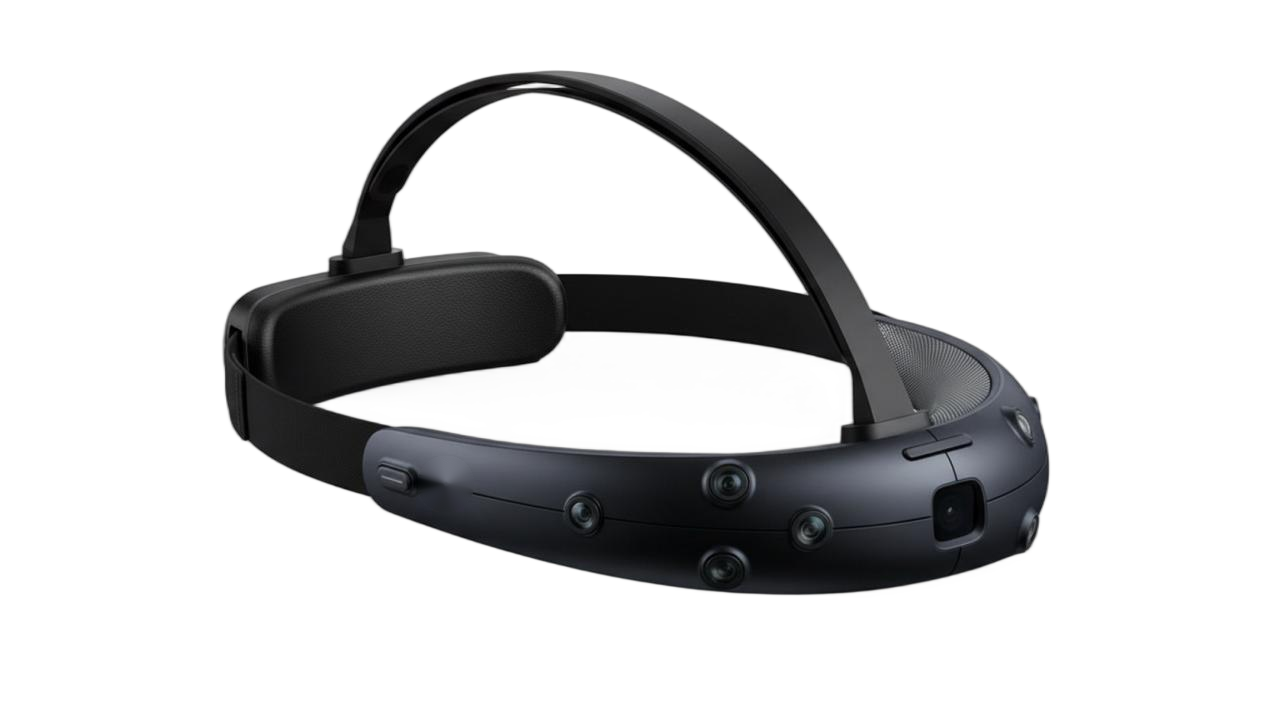
E8 design target is to eliminate the need for researchers and engineers to purchase, demarcate and synchronize multiple stand-alone equipment。An E8-covered visual (RGB-D + binary), motion (6-axis IMU), touch (might sensor array) and voice (microphone array) four sensor channels and complete inter-modular space-time synchronization at the hardware level。Below is a summary of the core parameters。
In terms of data compatibility, the E8 output format is original compatible HuggingFace LeRobot and Open X-Embodiment For example, mainstream smart data frameworks, data collection can be used directly to train VLA models without cumbersome formatting。
Who is the E8 for?
Precision assembly and manufacturing
Electronic manufacturing, auto parts assembly, aerospace precision match scenes, robotics need to sense the 3D position of the parts, mass hardness, penetration strength and exposure feedback。E8 tactile + visual integration capture capability provides a complete recording of the power change curve and visual operating sequence during assembly and provides a data base for training in precision assembly with VLA models。In the assembly tasks required for sub-millimetre accuracy, the introduction of tactile data allows robots to perceive in real time the critical state of "exposure-in place-excess" and significantly reduce the negative rate。
Research and development of agricultural harvesting robots
Fruit maturity judgement, extraction strength control, spatial positioning precision directly determines the efficiency and the fruit completion rate。E8 to synchronize the visual features (colour, size, shape), tactile feedback (hardness, surface texture) and spatial position (RGB-D depth data) of the fruit harvest to provide complete multimodal data for end-to-end training of agricultural robots Set。The IP54 protection level ensures stable operation of equipment in half an outdoor environment such as orchards and greenhouses。
Smart science lab.
The smart teams of colleges and colleges need high-quality multimodular data to study cutting-edge topics such as tactile-visual cross-modal alignment, multimodardization learning。E8 supports typical experimental settings such as desktop operations, double arm collaboration, smart hand manipulation, data output compatible with the LeRobot and Open X-Embodiment formats and seamless access to existing scientific tool chains。Five stand-alone devices for one device to replace the visual collector + IMU recorder + power sensor + microphone + synchronous trigger system in traditional programmes, significantly lowering the test threshold。
Autopilot data enhancement
The E8 first-person perspective collection model applies equally to driving behaviour data collection。Equipment can synchronize multi-dimensional information such as operating sequences, attention distribution, environmental visualization, spatial depth and voice interaction from the driver ' s perspective, providing high-quality multimodal data sources for auto-driving end-to-end model training and driver behaviour modelling。Eight-hour renewal to meet long road test requirements。
Five core competencies
1. RGB-D deep perception + bi-eye 3D vision
The E8 is equipped withRGB-D structured light depth cameraandBinocular RGB stereo cameratwo sets of visual modules. The RGB-D modules provide millimeter-level depth information for precise 3D positioning and capture planning of indoor objects; the binocular RGB module provides high-resolution stereovision data to support depth estimation in outdoor and wide-range scenarios. The integration of the two sets of visual data allows the E8 to adapt to the needs of whole-scene visual perception from desktop precision to open environments. In embodied intelligence research, high-quality depth perception is the basis for robotic object grasping, occlusion avoidance, and navigation.
2. Force/Tactile Sensors
Built into E8Pointy pressure distribution array power sensorAccurately document information on exposure pressure distribution, interaction size, area of exposure, etc.。Hard sense sensors support real-time perception of multiple-mean coverage and dynamics, filling data gaps in traditional visual capture programmes at the "exposure-operate" chain。The introduction of tactile data is particularly critical to the training of VLA models - based on an internal test at the Longfei AI Institute, the VLA model combining tactile data training has improved the success rate of pure vision programmes in precise insertions, soft grabs, etc.More than 30%。
3. Hardware-level time synchronization <0.5ms
One of the core challenges of multi-mode data isCross-sensor time alignment。Traditional programs usually rely on software-level time-stamp synchronization, affected by delays in operating system movement and network transmission shakes, and synchronization errors are usually in the10-50msmagnitude. The E8 uses a hardware trigger-level time-synchronization program, in which all sensor data is triggered by a single hardware clock signal, with synchronization error controlled<0.5mswithin. This means that at a sampling rate of 1000fps, there's less than a frame of time between visual frames, IMU readings, hard sense sampling and audio data. For the multimedia study on the need to relate accurately to "see-touch-hear" events, this precision is not available in the software program.
4. Built-in NPU edge computing
Built into E8NPU (neurological network processing unit) edge calculation modulesupporting data preprocessing, sensor integration and lightweight model reasoning at the collection end in real time。Researchers can preview, in real time, the quality of multimodular data during collection, perform base labeling operations, run lightweight target testing or attitude estimation models。The value of edge calculations is a significant reduction in the cost of data reprocessing — traditional solutions require synchronization, alignment and pre-processing after the return of all raw data to the server, while E8 can do most of the work at the collection end, reducing the volume of return data and subsequent processing time。
5. 8-hour battery life + IP54 protection
E8 Load high density batteries, support8 hours of continuous operation, meeting a full day of data collection needs. The entire device usesindustrial-grade IP54 protectionEffective ashproof and adapted to multiple work environments such as laboratories, factory workshops, greenhouses, etc.。For outdoor data collection scenes, IP54 protection ensures that the equipment works under light dust and splash conditions without additional protective measures。
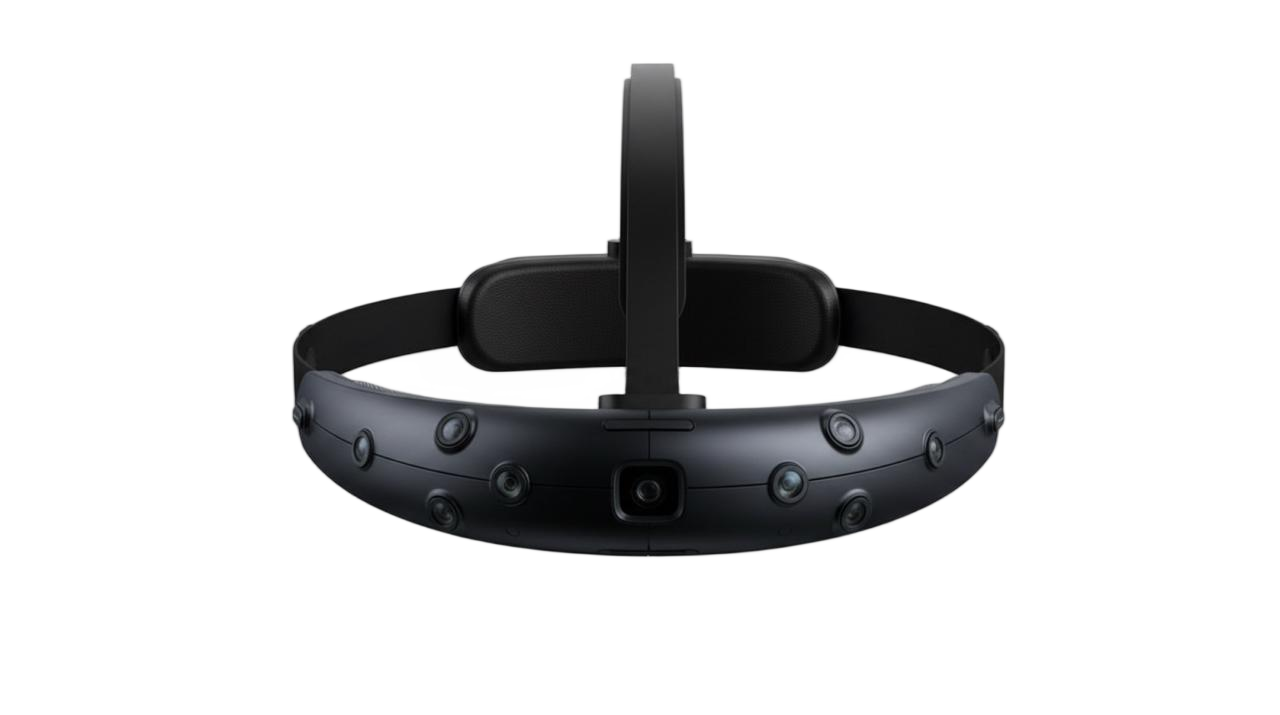
Comparison with similar solutions
In order to help users objectively assess the positioning of E8 in the market, the following multi-dimensional comparisons are made between E8 and the same product series E6, the common consumer-level coupling programme (GoPro + external to IMU) and the Meta Aria Gen 2 research equipment:。
| Relative dimensions | LanghuiE8 | Langhui E6 | GoPro + external IMU | Meta Aria Gen 2 |
|---|---|---|---|---|
| Positioning | Professional multimodal perception | Lightweight vision + IMU | Consumer-grade stitched solution | Research glasses |
| Sensors | RGB-D+ Double-eye RGB + IMU + Power + Microphone Array | Binocular RGB + IMU | Monocular RGB (requires external connection) | RGB + position tracking + eye tracking + IMU |
| Time Sync | <0.5ms hardware-level | <1ms hardware-level | >10ms software-level | Hardware-level (not disclosed) |
| Haptic data collection | Support (fingerline pressure distribution) | Not Supported | Not Supported | Not Supported |
| ATE Accuracy | 4mm | 6mm | Cannot be guaranteed | Not disclosed |
| Edge computing | Built-in NPU | None | None | Yes (chip-level) |
| Depth perception | RGB-D structured light | None | None | None |
| Data Format | LeRobot/Open X-Embodiment | Same as left | Self-development | Closed source |
| Battery Life | 8h | 8h+ | GoPro 2.5h | 6-8h |
| Protection | IP54 | Consumer-grade | IP68 (waterproof) | Consumer-grade |
| Access | Contact business advice | Contact business advice | Consumer-level market purchases | No external sales |
| Availability | Available for direct purchase | Available for direct purchase | Very easy to obtain | Very difficult (research collaboration only) |
Comparison conclusion
The following objective conclusions can be drawn from the table above:E8 is a rare "opening-in-the-box" multi-mode data collection device.Differentiated advantage in sensor coverage, time synchronous precision and tactile collection capability。E6 fits the lightweight scenario with only visual plus IMU, and costs less.;The GoPro coupling scheme, although it has a very low threshold, is two orders of magnitude different from E8 and does not provide Depth and tactile data suitable for initial validation of low accuracy requirements;Meta Aria Gen 2 sensors are rich and have unique capabilities such as eye tracking, but are not sold externally, are extremely difficult to access, and the data format is closed。Users should choose the appropriate option based on the modelling needs and precision requirements of their own research。
Industry context: why multi-modular data is needed in 2026?
In 2026, it was widely regarded by industry asYear of smart commercialization。The demand for high-quality multi-modular training data is booming with the accelerated landing of human robots in industrial manufacturing, storage logistics, agricultural extraction, etc.。Traditional, visual-based robotic data collection is no longer able to satisfy the physical sensory dimensions of touch, power, etc. of the precision operating scene.。
Academicly, the importance of multi-modular sensor data is widely recognized。Nature, published in 2025, multimodular embodied intelligence system, states that the size and quality of multimodular sensory data will directly determine the ability of smart systems to migrate from Sim-to-real。The paper combed key technology routes such as visual-touch cross-modular alignment, multi-sensor time and space synchronization and provided direction for industry development。This judgement has also been repeatedly validated by cutting-edge practices such as Google DeepMind, RT-2, Tesla Optimus, Figure AI -- robotic systems that integrate multimodular perception are significantly better than purely visual programmes in terms of transversal capabilities and operational precision.。
At the data level, the internal test data from the Langhui AI Institute show thatThe VLA model, which integrates tactile data training, increases the success rate in precision operations by about 30%.。Touch data fills long-standing data gaps in the "exposure-action" chain, enabling models to learn about power control strategies rather than relying solely on visual estimates。This data upgrade is particularly critical for precision assembly, soft grabs, and directly relates to the feasibility of having intelligence from a laboratory to a real line.。
Why choose E8?
The five senses are all collected and the same product is incapable of doing so.
In the current market, there are very few integrated devices that combine the five major sensor channels (RGB-D + binary), motion (IMU), touch (power) and voice (microphone array) simultaneously.。Most programmes either cover visual+IMU only or require users to assemble multiple sets of equipment themselves and address tagging and synchronization issues。E8 is a genuine "five senses all capture" device that provides a complete data base for the multimediad intelligence study.。
Open the box and replace the traditional five sets.
Traditional multimodular data acquisition requires the acquisition of depth cameras, binary cameras, IMU modules, sensor and microphone arrays, and the development of a synchronized trigger system and data alignment tool chain on its own。Not only does the process take weeks, it also introduces a large number of marked errors and synchronized deviations。E8 integrates the functionality of five sets of equipment into one device, exits the plant and completes the sensor marking, and the user opens the box and starts data collection.。
Data costs reduced by 60%
Multi-modular data collection using E8 was calculated to reduce data production costs by more than 60 per cent compared to the traditional programme of purchasing five separate sets of independent equipment and self-integrated.。Cost reductions arise from three aspects: reduced acquisition cost of equipment (one replacement of five units), elimination of human costs for calibration (hardware-level synchronization without manual alignment), and increased reprocessing efficiency resulting from NPU margin calculations。
Localized technical support
Langhui provides complete pre-sale technical programme advice and post-sale technical support services, including equipment deployment guidance, collection programme design, data formatting, etc.。For higher education and scientific teams, Langhui also provides channels of academic cooperation to support joint research and technical paper cooperation。
Frequently asked questions
How to choose between E8 and E6?
Select E8 if your research or application requires touch/force data, depth perception or edge computational capability。E6 has a higher value if position tracking or basic SLAM studies are required only for visual plus IMU data。In simple terms: E8 fits the fine operating scene that requires multimodal data, E6 fits the lightweight scenario that is visual.。View E6 product details
What's the accuracy of the sensor??
E8 Hard sense sensors support the collection of finger-tip pressure distributions, which can record multi-mean pressure distribution, area of exposure and direction to force。Specific precision parameters vary according to the acquisition pattern and range, and it is recommended that a detailed sensor specification table be obtained in contact with the Langhui technical team。The time synchronisation accuracy of the power data is also hardware & lt;0.5 ms, accurate alignment with visual and IMU data。
Data formats supported?
E8 Data Output Original Compatible with HuggingFace LeRobot and Open X-Embodiment, directly for VLA model training。Also supporting the export of custom formats, including RAW raw data, ROS bag and common video +CSV combinations。Through Ego SDK (planning), users can also customize data output formats and flow logic through API。
How to try or purchase?
You can contact Langhui for trial applications or procurement advice by: 137-5502-0164,Email lk@langhuiai.com, or visitEgo Product Series PageLearn more. Langhui offers a standard procurement process and academic collaboration channels.